
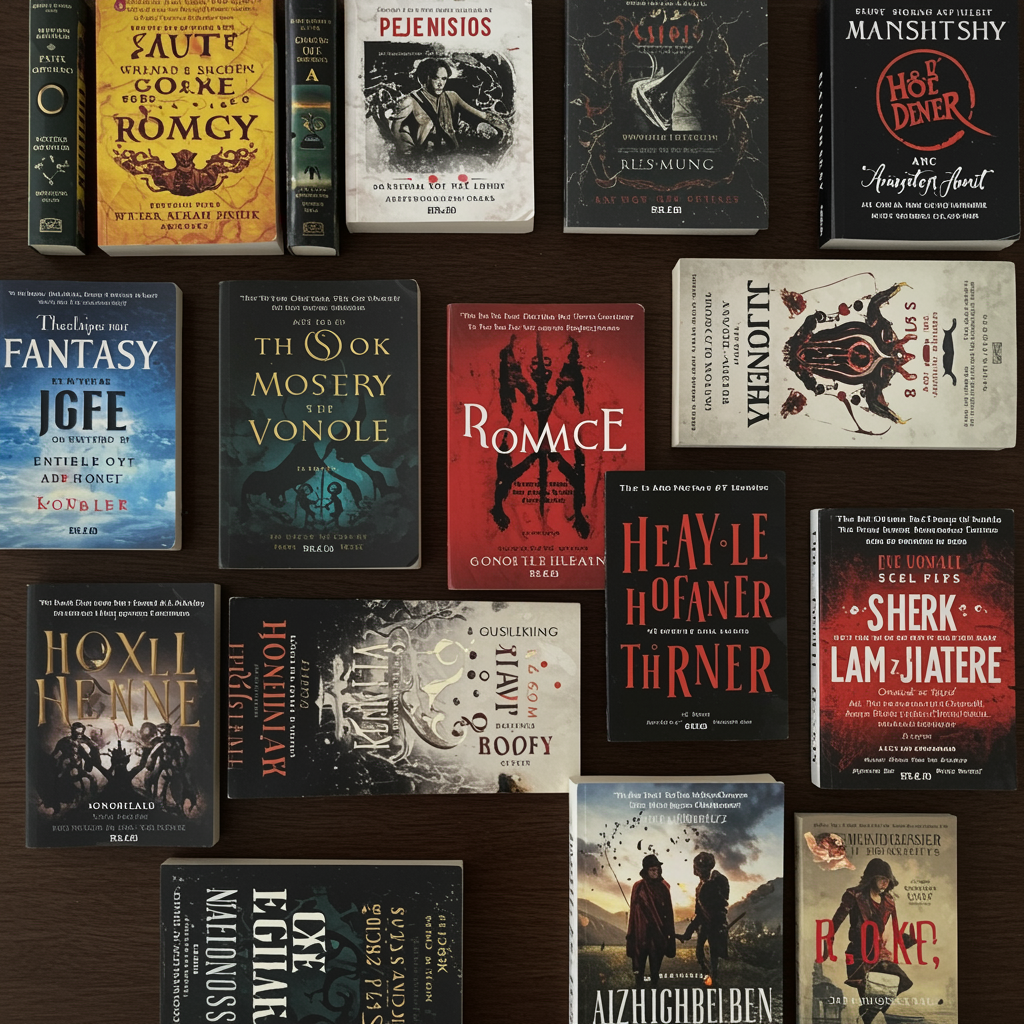
You want to find a great story, but the sheer number of book genres can feel overwhelming.
We created this guide to help you navigate the library shelves with confidence. Understanding book genres makes it easier to pick novels you will actually finish.
Whether you are a student analyzing texts or a casual reader looking for an escape, this list covers everything you need to know.
Why Genres Matter
Think of genres as a promise between the author and the reader. When you pick up a mystery, you expect a puzzle. When you grab a romance, you expect a love story.
Knowing these categories helps you find books that match your current mood. It also helps students understand the themes and structures common in literature classes.
The Two Main Categories
Before we get into specific styles, we must divide all books into two massive groups.
Fiction
These stories come from the author’s imagination. The characters and plot might feel real, but they never actually happened.
- The writer invents the people and events.
- The goal is usually to entertain or evoke emotion.
- Examples include Harry Potter or The Great Gatsby.
Non-Fiction
These books deal with facts, real people, and actual events. The author commits to telling the truth.
- The content relies on research and memory.
- The goal is to inform, teach, or document history.
- Examples include history books, biographies, and cookbooks.
Popular Fiction Genres
Most bestsellers fall into one of these specific categories. Let’s break them down so you know exactly what to look for.
Fantasy
Fantasy books take you to worlds that do not exist. They introduce magic, mythical creatures, and supernatural laws.
What to expect:
- Complex magic systems aimed at solving problems.
- Imaginary worlds with their own maps and history.
- A clear battle between good and evil.
Readers love fantasy because it offers a total escape from modern life. You get to imagine “what if” on a grand scale.
Science Fiction (Sci-Fi)
Sci-Fi often gets confused with fantasy, but there is a key difference. Science fiction deals with what could happen through technology and science.
Key elements:
- Space travel, aliens, or time travel.
- Future societies or dystopian governments.
- Heavy focus on technology and its impact on humans.
You read this genre to explore ethical questions about where humanity is heading.
Mystery and Thriller
These genres keep you on the edge of your seat. While they overlap, they have distinct pacing.
Mystery: A crime happens, and the protagonist must solve it. You follow the clues alongside the detective. The answer usually comes at the very end.
Thriller: The danger is present right now. The hero must run, fight, or outsmart a villain to survive. The clock is always ticking in a thriller.
Historical Fiction
We love this genre because it blends learning with entertainment. The author takes a real time period and inserts fictional characters into it.
Why read it:
- You experience history through emotional storytelling.
- The settings include accurate details about food, clothes, and speech.
- It often highlights forgotten voices from the past.
Students find this genre particularly helpful for understanding the human side of historical events.
Romance
This is the best-selling genre in the world for a reason. The central plot focuses entirely on two people falling in love.
The Golden Rule: A romance novel must have an optimistic ending. We call this the “Happily Ever After” (HEA). If the story ends in tragedy, it is a drama, not a romance.
Horror
Horror aims to create fear, dread, or disgust. It plays on our deepest anxieties about death and the unknown.
Common themes:
- Ghosts, monsters, or psychological madness.
- Dark settings like abandoned houses or isolated towns.
- A sense of helplessness against a greater force.
Literary Fiction
Teachers and critics often talk about “literary fiction.” This label means the book focuses more on style and character depth than on a fast-moving plot.
Characteristics:
- Beautiful, complex writing style.
- Focus on internal thoughts and emotional growth.
- Endings are often ambiguous or realistic rather than happy.
Exploring Non-Fiction
Non-fiction is not just for textbooks. Many readers find real life stranger and more interesting than anything an author could invent.
Biography and Autobiography
These books tell the life story of a real person.
- Biography: Someone else writes the story of a person’s life.
- Autobiography: The person writes their own life story.
You read these to understand how successful or famous people overcame obstacles.
Memoir
A memoir is similar to an autobiography, but it is more focused. Instead of the whole life, it covers a specific theme or time period.
For example, an author might write a memoir just about their childhood or their time traveling. Anna Quindlen writes excellent memoirs that explore family and aging.
Self-Help and Personal Development
You turn to these books when you want to improve a specific part of your life.
- They offer actionable advice and strategies.
- Topics cover money, relationships, mental health, and productivity.
- The tone is usually encouraging and instructional.
Format Categories
Sometimes, a book is defined by its format or target age rather than its content.
Young Adult (YA)
YA is technically an age category (12-18 years), but it functions like a genre.
What defines YA:
- Protagonists are teenagers.
- Themes involve coming of age, first love, and identity.
- The plot moves fast to keep younger readers engaged.
Adults read YA too because the stories are often intense and emotionally raw.
Graphic Novels
These are books that use art to tell the story. They are not just comic books for kids.
You can find graphic novel versions of memoirs, history books, and classics. They are excellent for visual learners.
How to Choose Your Next Book
With so many book genres available, picking one can feel hard. Try this simple elimination method.
1. Check Your Mood
Do you want to cry, laugh, or feel scared?
- For laughs: Try a comedic memoir.
- For comfort: Pick a cozy mystery or romance.
- For adrenaline: Grab a thriller.
2. Consider Your Energy Level
If you are tired from school or work, avoid dense literary fiction. Go for something fast-paced like a fantasy adventure or a page-turner mystery.
3. Step Outside Your Comfort Zone
If you only read Sci-Fi, try a Historical Fiction novel. You might find that good storytelling transcends the setting.
Final Thoughts
Reading opens up new perspectives. Don’t limit yourself to just one section of the bookstore.
Explore these book genres and see what speaks to you. You might discover that you love biographies or horror novels more than you thought possible.
The most important rule is to read what you enjoy. Life is too short to force yourself through books that bore you. Happy reading!